Showing posts with label a lovely sunday for creve coeur. Show all posts

Tuesday, September 20, 2016

Daydreaming Within Reason: A Lesson from Tennesee Williams

by Logan Peaslee, marketing and development assistant

“One wakes up in the morning and reaches for eyeglasses, coffee, and a myth. You can see that one needs vision, energy, and that myth. Otherwise, the day is simply impossible to face, endure, survive.” –Tennessee Williams
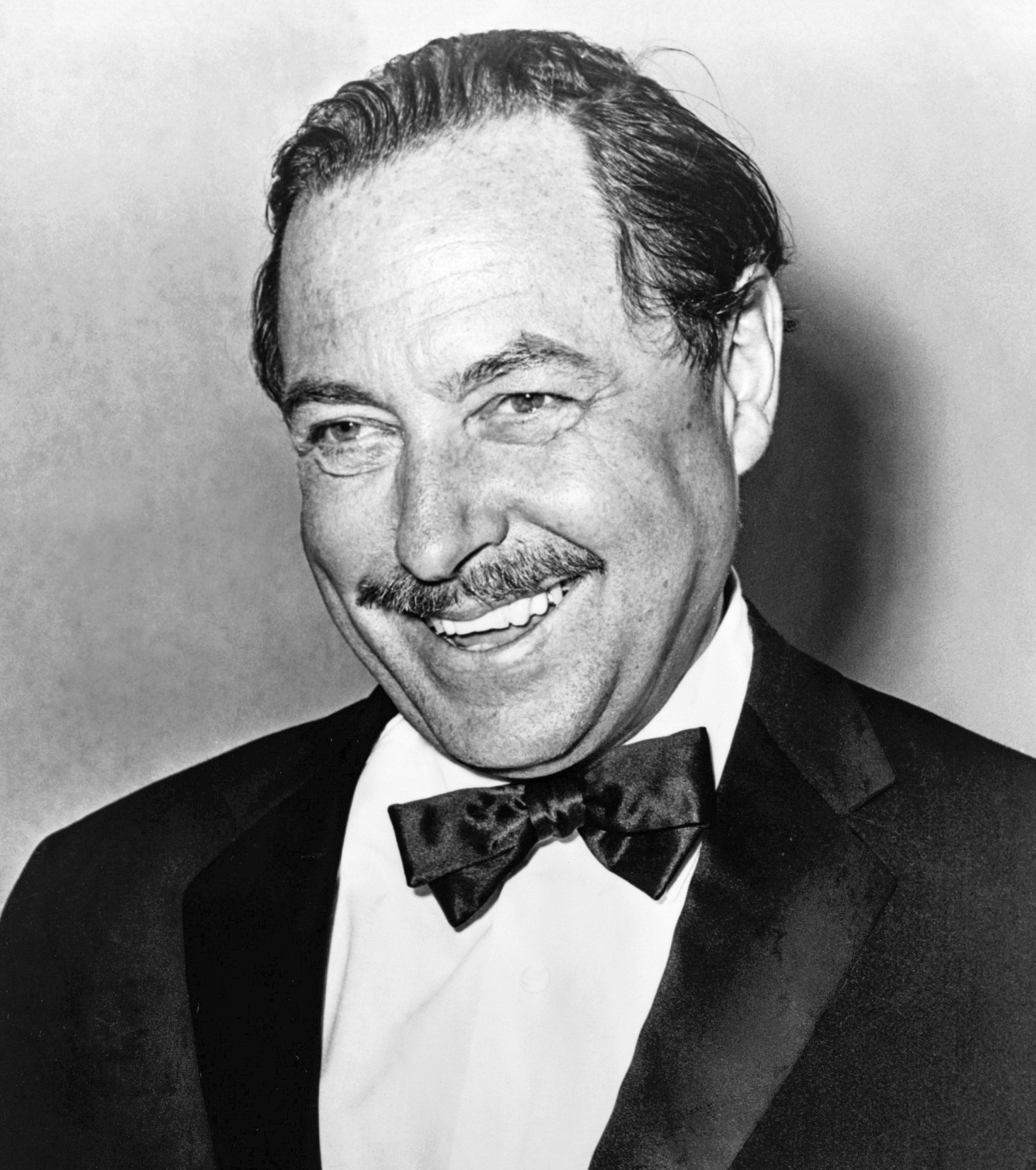
Tennessee Williams, photographed in 1965, about
10 years before he wrote CREVE COEUR.
Photo: Wikimedia Commons.
But what is the myth that Williams believes we reach for in the morning? The answer lies in his play, A LOVELY SUNDAY FOR CREVE COEUR, which follows a group of women as they hope their way through a Sunday. Dorothea, a 30-something schoolteacher, hopes for love. Bodey, her kind-hearted German roommate, hopes to pair Dorothea with Bodey’s twin brother. Helena, the local art teacher, hopes to feign class. And Miss Gluck, Dorothea and Bodey’s neighbor, hopes to survive the loss of her mother. 

Bodey reaches for the myth that her twin brother, Buddy, and Dorothea should be together. Bodey believes that, if Dorothea were to focus her attention on Buddy, she could see Buddy romantically. In turn, Bodey reaches for the myth that two people can be meant for each other and that she is capable of recognizing and facilitating that.

Helena reaches for the myth that one’s success is reflected in one’s wealth. More specifically, she believes that she can elevate herself socially by securing nicer housing. The myth that Helena reaches for is not an uncommon one; people often occupy their presents by working towards obtaining things, material things that they think will bring them mental ease.

Dorothea reaches for the myth that what she feels for her principal, Ralph Ellis, is love. Dorothea mistakes her admiration of Ralph Ellis’ class for adoration of Ralph Ellis as a person. She also perceives her sexual encounter with him as proof of his commitment to her. Believing there is a mutual commitment between herself and someone she adores, Dorothea—and, consequently, the audience—assumes she is in love. But if her hope goes unfulfilled, can the audience assume she is experiencing true heartbreak? Or is Dorothea just experiencing disappointment and loneliness as she hopes? 

One character is without a doubt experiencing true heartbreak—Miss Gluck. Miss Gluck is being torn apart by the loss of her mother, yet her heartbreak is on the periphery of the play, emerging only as a comical inconvenience. With this structure, Williams criticizes people’s tendency to name disappointment heartbreak and shows that doing so discredits a supremely real and supremely difficult experience. It’s much like people who are late to eat their lunch describing themselves as starving. Frustratingly, Dorothea even equates her situation to Miss Gluck’s when she says, “Now Miss Gluck, now Sophie, we must pull ourselves together and go on.” 

Moreover, this play serves to criticize how personal myths, like Dorothea’s “romantic illusions” (as Helena describes them), can waste a day; they can waste a lovely Sunday. Williams implies that relying on unfounded hope and waiting for unpromised outcomes may tend to lead to disappointment, disappointment that may be falsely named heartbreak. Myths can plunder the present. But he also claims that myths help us face, endure, and survive the day. Williams would likely suggest that we daydream within reason.

The myth we reach for is that one’s life—its possibilities and its experiences and its relationships—is more magical, more romantic than it is. Life is beautiful and heartbreaking, absolutely. It’s just beautiful and heartbreaking less often than in our daydreams. Some days are nothing more than a lovely Sunday for a picnic in a park.

Milwaukee Chamber Theatre's production of A LOVELY SUNDAY FOR CREVE COEUR runs Sept. 21 to Oct. 16 at the Broadway Theatre Center's Studio Theatre, 158 N. Broadway. Click here for tickets or call 414.291.7800.

References
Grissom, James. Follies of God: Tennessee Williams and the Women of the Fog. New York, NY: Knopf, 2015.

Monday, August 29, 2016

Taking a Trip to LOVELY SUNDAY's Real Creve Coeur Lake

by Logan Peaslee, MCT marketing and development assistant

Although mentioned frequently throughout Tennessee Williams' A LOVELY SUNDAY FOR CREVE COEUR and even used as the title, Creve Coeur is never actually seen by audience members; the play's action takes place entirely in the home of its protagonist Dorothea. But the destination’s history, current status, and name itself are too interesting to leave offstage.

Photo: St. Louis Post-Dispatch
Creve Coeur Lake, which is the largest natural lake in Missouri (320 acres!), has a history of hosting boating events. In the 1880s, the lake hosted the Mississippi Valley Regatta and the Creve Coeur Regatta. Perhaps most interestingly, the rowing competition for the 1904 Summer Olympics was held at Creve Coeur Lake, with the United States earning five gold medals for rowing that year. By the 1930s, when Williams' play takes place, the lake had become a popular picnic spot for residents of St. Louis. In A LOVELY SUNDAY FOR CREVE COEUR, several of the characters are preparing for one such picnic.

Creve Coeur’s interesting history did not end with the 1904 Summer Olympics. As recently as June of 2015, the park found itself in the news. A rising in the Missouri River pushed Creve Coeur Lake out of its banks and flooded the entire park. With the picnic areas, trails, and parking lots completely under water, there was likely little prospect of a lovely Sunday at Creve Coeur. Fortunately, the park's facilities had been designed to withstand flooding after a similarly large flood two decades prior (the Great Flood of 1993) destroyed the park’s amenities, and the park has since recovered

The name of the lake and park is French, and it means “broken heart” or "heartbreak." Legend has it that a Native American princess fell in love with a French fur trapper when the area was being settled. When her love was not returned, she jumped from a ledge overlooking the lake. From then on, the French settlers referred to the lake as broken heart lake, Creve Coeur Lake. 

Boating is a part of Creve Coeur Lake's history
as well as its present. Photo: Wikimedia Commons.
Since A LOVELY SUNDAY FOR CREVE COEUR explores the concept of heartbreak, it is fitting that Tennessee Williams included this particular lake in his play. The meaning of “creve coeur” also raises an evocative question: why a location never even visited in the play is worthy of the title.

In 1945, Creve Coeur Lake and the area surrounding it became a county park. Visiting the park today, you can return to the lake’s boating roots and sail, as well as canoe, kayak, and paddleboard. The park has Missouri’s first and only treetop adventure course. At fifty feet in the air, the course offers zip lines, swings, and an obstacle course. For those who prefer dry land and who are afraid of heights, Creve Coeur Park has gorgeous hiking and biking trails. Aside from the many exciting activities mentioned, the park remains a popular picnic spot. So if you’re ever in the St. Louis area and want to have a LOVELY SUNDAY afternoon, head to Creve Coeur Park!


References

Barr, Diana. “Missouri Declares State of Emergency Amid Flooding.” St. Louis Business Journal. St. Louis Business Journal, 19 June 2015. Web. 24 Aug. 2016.

“Contests at the Oars.” Archives. The New York Times, n.d. Web. 24 Aug. 2016.

“Creve Coeur.” St. Louis County. St. Louis County Government, n.d. Web. 24 Aug. 2016.

“Creve Coeur Lake Memorial Park.” St. Louis Audubon Society. Wild Bird Center of South County, n.d. Web. 24 Aug. 2016.

Dalton, Gloria. “History.” The Heart of Community and Commerce. City of Creve Coeur, n.d. Web. 24 Aug. 2016

“History of Creve Coeur.” St. Louis County. St. Louis County Government, n.d. Web. 24 Aug. 2016.

“Sporting Affairs.” Archives. Chicago Tribune, n.d. Web. 24 Aug. 2016.


Sullivan, James. Spalding’s Official Athletic Almanac for 1905. New York, NY: The American Publishing Company, 1905.